Conical vs Flat Burr Grinders for Chocolatey Brazilian Espresso
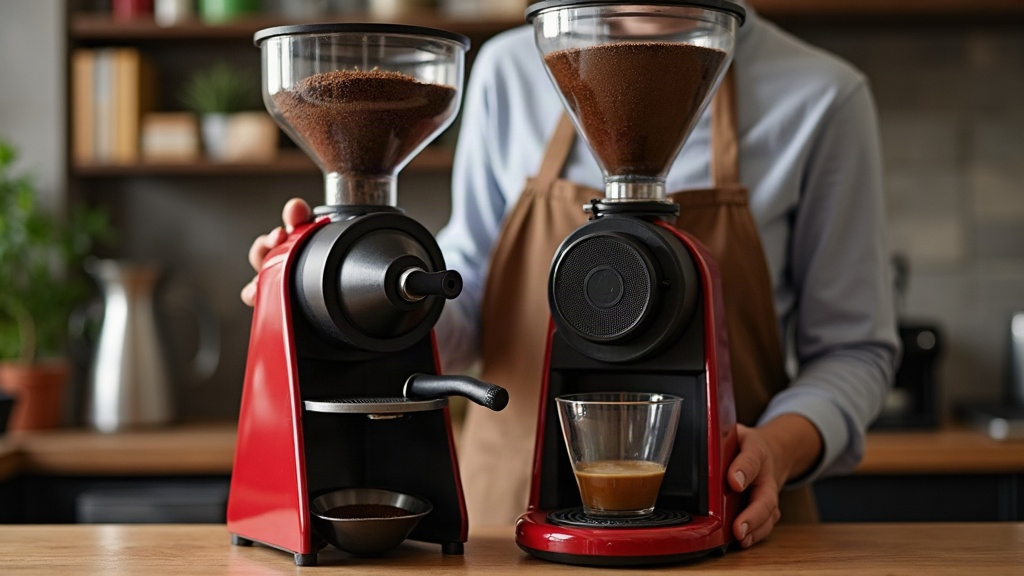
If you’re pulling shots with chocolatey, low-acid Brazilian espresso and wondering whether a conical or flat burr grinder suits the beans better, here’s the short answer: conical burrs tend to amplify body and sweetness, while flat burrs sharpen clarity and highlight subtle nuance. For most Brazilian naturals and pulped naturals, conical burrs are usually the easier, more forgiving match.
Why Burr Shape Matters for Brazilian Espresso
Brazilian espresso beans (think Cerrado naturals, pulped naturals, or classic Santos-style lots) are prized for their nutty, chocolatey, low-acid profile. These beans tend to run less dense than washed African or Central American coffees, and that lower density makes them noticeably more sensitive to how evenly the grind particles come out.
Burr geometry directly affects:
- Particle size distribution (PSD): how uniform the grounds are
- Fines production: the amount of ultra-fine dust that affects extraction
- Heat generation during grinding
- Flavor clarity vs. body in the final shot
Conical Burrs: Built for Body and Sweetness
Conical burrs grind in a cone-and-ring shape. The result is a wider particle size distribution, with a good amount of fines mixed in alongside some larger “boulders.”
Why this works well for Brazilian espresso:
- The broader PSD creates a rounder, syrupy mouthfeel, exactly what you want for chocolate, caramel, and nutty notes.
- Lower RPM conical grinders (common in home machines like the Niche Zero or Eureka Mignon) run cooler, which helps preserve delicate sugars instead of scorching them.
- They’re forgiving on dial-in. A slight grind adjustment won’t tank your extraction, which matters a lot with naturally processed beans that can vary in density from one lot to the next.
Trade-off: conical burrs can mute high-toned fruit or floral notes. But Brazilian espresso was never chasing brightness in the first place, so that’s rarely a real downside here.
Flat Burrs: Built for Clarity and Precision
Flat burrs work differently: two parallel, ring-shaped plates spin at a higher RPM, producing a tighter, more uniform particle size distribution.
Why this matters for Brazilian espresso:
- Higher uniformity means more even extraction, and that can pull out subtle cocoa-nib or toasted-nut complexity that conical burrs tend to smooth over.
- They’re better suited to lighter-roasted Brazilian lots, where acidity and origin character need room to show through.
- Flat burrs dominate commercial setups (Mazzer, Mahlkönig, Baratza Vario) because they hold consistency across hundreds of shots a day.
Trade-off: flat burrs run hotter and faster. Without cooling breaks or a lower-speed motor, that heat can flatten sweetness in darker-roasted, chocolate-forward Brazilian beans.
Head-to-Head: Quick Comparison
| Factor | Conical Burrs | Flat Burrs |
|---|---|---|
| Body/mouthfeel | Fuller, syrupy | Lighter, cleaner |
| Flavor clarity | Softer, blended | Sharper, more defined |
| Heat retention | Lower (cooler grind) | Higher (unless geared down) |
| Dial-in forgiveness | More forgiving | More precise but fussier |
| Best roast match | Medium-dark, chocolatey | Light-medium, nuanced |
Which Should You Choose for Brazilian Espresso?
- Choose conical burrs if you’re roasting or buying medium-dark Brazilian espresso and want maximum chocolate, caramel, and low-acid comfort in the cup. This is the pick for daily drinkers and milk-based drinks like lattes and cappuccinos.
- Choose flat burrs if you’re working with lighter-roasted Brazilian naturals and want to show off nuanced sweetness, subtle fruit, or a more “specialty” flavor separation, especially in straight shots or espresso tonics.
Practical Grinder Recommendations
- Budget/home conical: Baratza Encore ESP, Eureka Mignon Specialita
- Premium conical: Niche Zero, DF64 Gen 2 (conical version)
- Flat burr home: Baratza Sette 270, DF83
- Commercial flat: Mazzer Mini Electronic, Mahlkönig E65S
Final Takeaway
For chocolatey Brazilian espresso roasts, conical burr grinders are generally the safer bet, the one more likely to play nicely with the natural sweetness and low acidity that make these beans so popular. Flat burrs aren’t a mistake though. They just push the profile toward clarity and precision, which rewards lighter roasts and the more experimental processing styles showing up on shelves lately. At the end of the day, match your burr choice to your roast level and what you actually want in the cup, not just to a spec sheet.