Coffee Bloom Timing for Anaerobic Natural Beans in a Ceramic Dripper
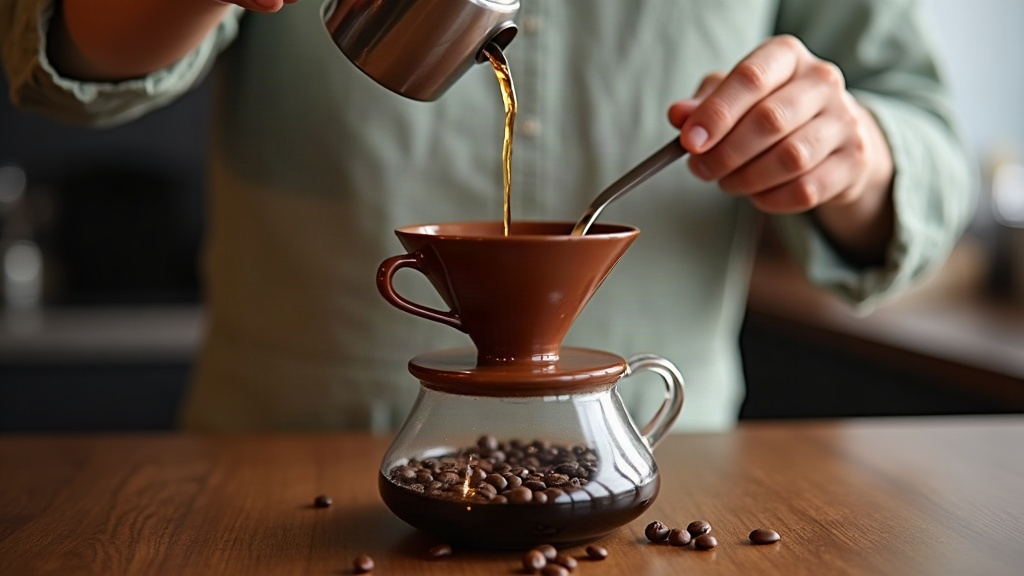
Bloom timing for freshly roasted anaerobic natural beans in a ceramic dripper runs 40-60 seconds, noticeably longer than the 30-45 seconds you’d use for a washed coffee. Why the difference? Anaerobic naturals trap extra CO2 during fermentation and their cell structure is denser than normal, so gas escapes slower. Rush the bloom and you’ll get channeling, patchy extraction, and a cup that tastes sour on one sip and flat on the next.
Why Anaerobic Naturals Bloom Differently
Anaerobic fermentation happens in sealed, oxygen-free tanks. That’s what gives these beans their loud, funky, fruit-bomb flavor profile, but it also reshapes the bean physically. A few things happen as a result:
- They hold onto more trapped CO2 than washed beans, or even standard naturals
- Gas release is slower and patchier, thanks to thicker, sugar-dense cell walls
- Roasters often keep the roast a touch lighter to protect those fermentation notes, which means even more CO2 stays locked inside
Add a fresh roast date into the mix (anywhere from 3 to 14 days off roast) and you’ve got a bean that puffs up like crazy during bloom but genuinely needs the extra seconds to finish degassing before water can soak the grounds evenly.
Ideal Bloom Timing Step-by-Step
1. Check your roast date first. Beans at 4-10 days post-roast sit right at peak CO2 activity, which is actually the sweet spot. Anything under 72 hours is still too gassy, it’ll “burp” and spit unpredictably. If you can, let it rest one more day.
2. Use the right water-to-coffee bloom ratio. Go with 2-3 times the dry coffee weight in water. So for 20g of coffee, pour 40-60g of bloom water, heated to 198-205°F (92-96°C). That slightly hotter water matters here, it helps cut through the dense crema layer these beans tend to form.
3. Time the bloom at 40-60 seconds.
- 0-10 seconds: first saturation hits, bubbling kicks off hard
- 10-40 seconds: peak CO2 release, the dome rises visibly and starts cracking
- 40-60 seconds: bubbling eases into a gentle simmer, that’s your signal to move on
Don’t just trust a stopwatch. Watch the bed itself, it should settle and flatten a bit before you continue. Every anaerobic batch behaves a little differently, even from the same roaster.
Ceramic Dripper Considerations
Ceramic drippers, whether a V60-style cone or flat-bottom, hold and release heat differently than plastic or metal. That changes how the bloom plays out:
- Preheat thoroughly. Ceramic has a lot of thermal mass and will pull heat straight out of your bloom water if it’s cold. Rinse it with boiling water, let it sit about 30 seconds, then load your coffee.
- Watch the gas escape pattern. Cone-shaped drippers funnel CO2 release through one narrow channel, so anaerobic beans can actually “geyser” upward mid-bloom. Pour your bloom water in slow, small circles from the center outward instead of dumping it on, this keeps you from blasting the bed apart.
- Don’t swirl too early. A light swirl around the 50-second mark helps knock loose any stubborn gas pockets. But swirl while the bloom is still actively bubbling and you’ll mess up even saturation.
Common Mistakes to Avoid
- Blooming too short (under 30 seconds): CO2 stays trapped in the grounds, which leads to channeling in the main pour and a sour, lopsided cup.
- Blooming too long (over 90 seconds): Pulls too much out of the delicate fermentation compounds and flattens the fruit character that’s the whole point of anaerobic processing.
- Water too cool: Anything under 195°F struggles to break through the thicker oils and sugars sitting on the bean surface from natural processing.
- Ignoring visual cues: Sticking rigidly to “45 seconds, always” ignores how much batches vary. Watch the bed, not the clock.
Quick Reference Table
| Factor | Standard Washed | Anaerobic Natural |
|---|---|---|
| Bloom time | 30-45 sec | 40-60 sec |
| Water temp | 195-205°F | 198-205°F |
| Bloom ratio | 2x coffee weight | 2-3x coffee weight |
| Visual cue | Steady dome | Dramatic rise + cracking |
Conclusion
Anaerobic natural beans just ask for more attention at bloom than a typical washed coffee does. Give them 40-60 seconds, water on the hotter end, and a generous bloom ratio, enough to let all that trapped CO2 work its way out before the main pour. In a ceramic dripper specifically, preheat properly and pour with a light hand so you’re not fighting the dramatic gas release these funky, fruit-forward beans tend to produce. Nail this one step and the full complexity anaerobic processing is built to deliver opens right up.