Why Your New French Press Makes Bitter Dark Roast Coffee
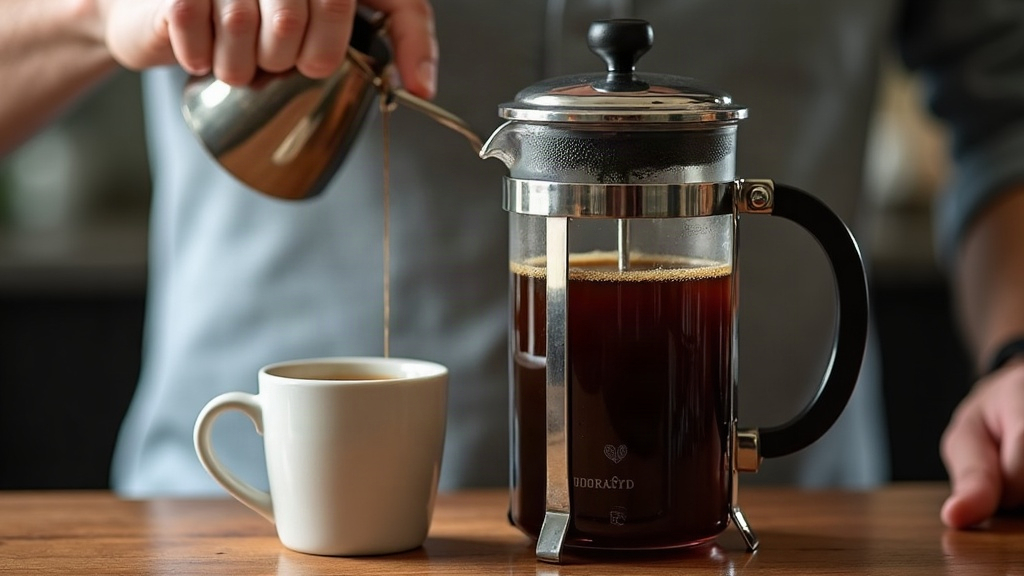
If your brand-new French press is turning your favorite dark roast into something bitter and harsh, don’t blame the press just yet. Nine times out of ten the real culprits are the same four variables: grind size, water temperature, brew time, and the press itself (filter mesh, rinsing, that kind of thing). Dark roasts are a bit of a paradox here. They’re forgiving in some ways, brutal in others. Their oils and lower density mean they extract faster than lighter beans, so a sloppy grind or a few extra seconds of steeping shows up as outright bitterness instead of just a slightly off cup. Let’s walk through how to diagnose it and actually fix it.
Why Dark Roasts Taste Bitter in a French Press Specifically
Dark roast beans are more porous and brittle than light or medium roasts. Practically, that means:
- They grind finer more easily, even at the exact same grinder setting
- They release flavor compounds faster during immersion brewing
- Their natural bitterness (from the roast itself, not necessarily from over-extraction) gets amplified by any brewing mistake
A French press is a full-immersion method, no paper filter catching fine particles or slowing things down. That’s exactly why it gives you such good body and flavor. But it also means every mistake gets magnified. Unlike a pour-over, there’s no drain for excess bitterness to escape through. Whatever happens in the carafe stays in your cup.
1. Check Your Grind Size First
This is, hands down, the number one cause of bitter French press coffee.
- The problem: Pre-ground “dark roast” bags from the grocery store are usually ground for drip machines, which means too fine for a French press.
- The fix: Go coarse and even, think breadcrumbs or coarse sea salt. If you’re grinding at home, lean toward the coarser end specifically for dark roasts, since they extract faster than lighter beans at the same setting.
- Quick test: Bitter coffee with a thick layer of sediment or mud at the bottom of your cup? That’s your grind screaming “too fine.”
2. Lower Your Water Temperature
Dark roasts actually want cooler water than light or medium roasts, which surprises a lot of people.
- Ideal range: 195-200°F (90-93°C) for dark roast, compared to up to 205°F (96°C) for lighter ones.
- The fix: Boil the water, then let it sit off the heat for 30-45 seconds before pouring. Water that’s too hot scorches the oils already sitting on the surface of dark roast beans, and that’s what gives you that sharp, almost ashy bitterness.
3. Shorten Your Steep Time
A lot of new French press owners follow the generic “4 minutes, no questions asked” rule. The thing is, that number was calibrated for medium roast and medium grind. Dark roast beans extract noticeably faster.
- Recommended steep time for dark roast: 3 to 3.5 minutes
- The fix: Set an actual timer, don’t eyeball it. Taste at 3 minutes. If it’s still weak, push to 3:30, but don’t go further than that. Color is a terrible indicator; the clock isn’t.
4. Plunge Slowly and Pour Immediately
Here’s something people forget: the coffee keeps extracting even after you’ve “stopped” the brew.
- Plunge the filter down slowly and steadily. Plunging fast agitates the fines at the bottom and pushes bitterness straight up into your cup.
- Pour out all the coffee immediately once you’ve plunged. Leaving brewed coffee sitting in the press, even for 5-10 minutes, keeps extracting it and will turn a perfectly good cup bitter in no time.
5. Rinse and Check a Brand-New Press
New French presses sometimes carry a faint plastic, metal, or packaging smell/taste that your brain reads as bitterness.
- Run one full cycle with just hot water, no coffee, through the new press and toss it out
- Check that the mesh filter actually seals against the glass. Gaps let fine grounds slip through, and that’s extra bitter sediment you didn’t need.
- Make sure the plunger assembly is screwed on tight; a loose screen causes the exact same problem
6. Use the Right Coffee-to-Water Ratio
Too much coffee crammed into too little water pushes a dark roast into over-extracted, bitter territory much faster than it would with a properly balanced ratio.
- Standard ratio: 1:15 to 1:17, coffee to water by weight (so roughly 30g coffee to 450-500g water)
- For dark roast specifically, sticking closer to 1:16 or 1:17 keeps the bitterness in check while still preserving a full body
Quick Troubleshooting Checklist
| Symptom | Likely Cause | Fix |
|---|---|---|
| Bitter + muddy/gritty | Grind too fine | Go coarser |
| Bitter + sharp/ashy | Water too hot | Cool to 195-200°F |
| Bitter + harsh aftertaste | Steeped too long | Reduce to 3-3.5 min |
| Bitter + inconsistent | Coffee sat after brewing | Pour out immediately |
| Bitter from first use only | New press residue | Rinse with water-only brew first |
Conclusion
Bitter coffee from a brand-new French press with dark roast is almost never a flaw in the press itself. It’s one, or usually more, of these: grind too fine, water too hot, steeping too long, or coffee left sitting around after brewing. Start simple: coarsen your grind and cut the steep time down to 3-3.5 minutes. Those two tweaks alone fix the majority of bitterness complaints people bring up. From there, change one variable at a time, taste as you go, and within a handful of brews you’ll land on a smooth, rich cup that actually does your dark roast justice.