Dial In Light-Roast Ethiopian Coffee on a Flat-Burr Grinder
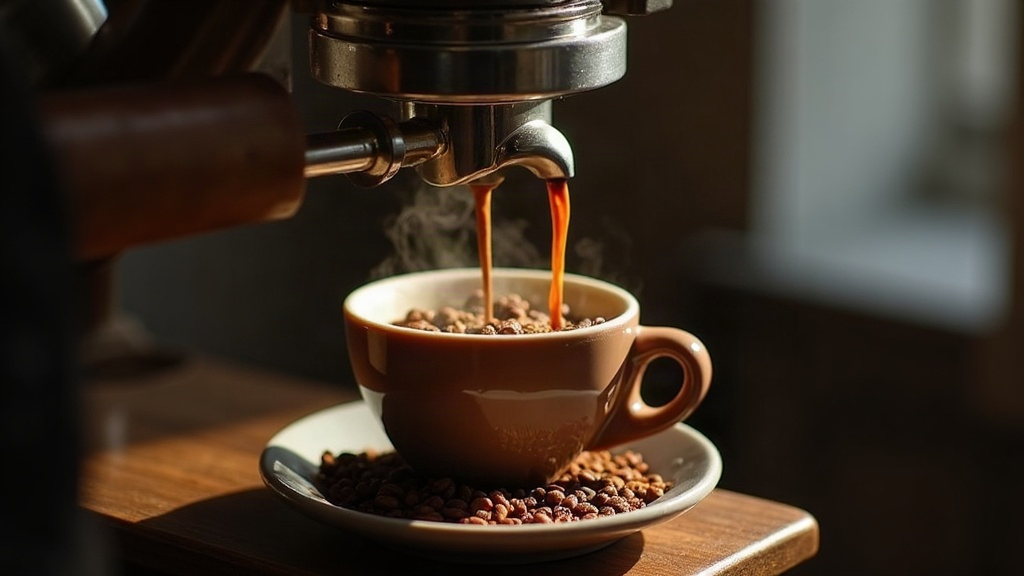
Light-roast Ethiopian coffee gets famous for a reason: bright, floral, fruit-forward cups that taste like nothing else on the shelf. But dial it in wrong on a flat-burr home grinder and you’ll get sour, thin, hollow shots instead. Nine times out of ten, the culprit is grind size, dose, or extraction time fighting against the bean’s dense, low-oil structure. Here’s how to actually fix it.
Why Light-Roast Ethiopian Coffee Is Harder to Dial In
Light roasts are denser and less soluble than dark roasts simply because they’ve spent less time in the drum developing sugars and breaking down cell structure. Ethiopian coffees crank up the difficulty further. Whether you’re working with a washed lot (Yirgacheffe, Gedeb) or a natural (Guji, Sidamo), you’re dealing with delicate florals, jasmine, and berry notes that vanish fast the moment extraction tips too far in either direction.
Flat-burr grinders (think Baratza Encore, Niche Zero clones, or entry-level Eureka models) chew coffee differently than conical burrs. You typically get a narrower, more uniform particle size with fewer fines. Practically speaking, that means:
- You’ll often need a finer grind than you’d expect on a conical setup.
- Channeling shows up fast if your dose or tamp isn’t even.
- Fine-tuning happens in tiny increments, since flat burrs are sensitive to even a half-click change.
Step-by-Step: Dialing In for Espresso
- Start with a baseline recipe. For an 18g dose, aim for a 1:2 ratio (36g output) landing in 25-30 seconds. Light roasts often taste better stretched a bit longer, up to 32-34 seconds.
- Grind fine, but not blindly fine. Start two to three clicks finer than what you’d use for a medium roast. Ethiopian light roasts resist water flow less than you’d guess once ground properly, so don’t hesitate to go tighter than instinct tells you.
- Taste for sourness vs. bitterness.
- Sour, sharp, thin? Grind finer or run the shot longer.
- Bitter, muted florals, ashy finish? Grind coarser or cut the time.
- Adjust one variable at a time. Touch grind size before dose or ratio. Flat burrs react fast, so a tiny half-click shift can swing the taste noticeably.
- Watch the shot visually. A healthy Ethiopian light-roast pour should flow evenly, honey-colored, with slow blonding near the end. A fast, watery stream means too coarse. A stalled, dripping trickle means too fine.
Step-by-Step: Dialing In for Pour Over
Honestly, light-roast Ethiopian coffee often shines even brighter in pour-over than in espresso. No pressure required to unlock the complexity here.
- Grind size: Medium-fine, roughly like coarse sea salt, a touch finer than a typical medium roast.
- Ratio: Start at 1:16 (say, 20g coffee to 320g water).
- Water temp: 200-205°F (93-96°C). Light roasts need that extra heat to extract fully.
- Bloom: 30-45 seconds with a 2x water-to-coffee bloom ratio. Low-oil light roasts degas less, so they need a gentler nudge to open up.
- Total brew time: 2:30-3:30 for a V60. If it’s finishing fast and tasting sour, tighten the grind.
Common Mistakes to Avoid
- Using stale beans. Ethiopian light roasts hit their peak 7-21 days post-roast. Too fresh and trapped CO2 causes uneven extraction. Too old and those florals just fade away.
- Ignoring humidity and altitude. Grind settings drift with the weather, no exaggeration. Recalibrate every few days, especially since light roasts are hygroscopic and soak up ambient moisture.
- Skipping a scale. Eyeballing volume hides small errors, and those errors matter a lot more with lighter, denser beans.
- Over-tamping for espresso. Light roasts channel easily. A firm, level tamp beats sheer muscle every time.
Quick Reference Cheat Sheet
| Method | Grind | Ratio | Time |
|---|---|---|---|
| Espresso | Fine (adjust in small steps) | 1:2 to 1:2.5 | 27–32 sec |
| Pour Over | Medium-fine | 1:15–1:16 | 2:30–3:30 min |
| French Press | Coarse | 1:15 | 4 min |
Final Thoughts
Dialing in light-roast Ethiopian coffee on a flat-burr grinder takes patience, no way around it. But the payoff, that burst of bright citrus, jasmine, and berry, makes the tinkering worth it. Make small grind adjustments, taste on purpose rather than out of habit, and jot down dose, time, and yield so you can repeat what actually worked. Get it dialed in once, and few coffees reward the effort quite like a properly extracted Ethiopian light roast.